
Insights

Browse the latest insights available to your account.

552 insights found

Why is Bank Bail-In Analysis Important?
27 Apr 2026Banking

Why is Bank Bail-In Analysis Important?

Bank bail-in analysis helps assess how losses would be allocated if a bank fails, under a framework designed to protect financial stability without relying on public funds. It is a key tool for understanding credit risk and the potential impact on investors and depositors.

Read insight: Why is Bank Bail-In Analysis Important?
Is Advanced AI the Next Systemic Financial Risk?
21 Apr 2026Banking

Is Advanced AI the Next Systemic Financial Risk?

Concerns are growing that increasingly powerful AI models could expose vulnerabilities in banking systems and critical financial infrastructure, posing a new form of systemic risk. While some of the threat may be overstated, it reinforces the need for strong cyber security, diversification, and robust contingency planning across the sector.

Read insight: Is Advanced AI the Next Systemic Financial Risk?
Treasury Bills: An Underused Treasury Investment?
21 Apr 2026Investing

Treasury Bills: An Underused Treasury Investment?

UK Treasury Bills offer high-quality, short-term government exposure with competitive yields, but remain underused due to operational complexity and limited market familiarity, despite ongoing efforts to expand the market.

Read insight: Treasury Bills: An Underused Treasury Investment?
Register Here: LGR Live Webinar
17 Apr 2026Webcasts

Register Here: LGR Live Webinar

Please register for LGR Live here - a practical webinar on local government reorganisation. This will be hosted on Wednesday 29th April 2026 at 10am.

Read insight: Register Here: LGR Live Webinar
Is the Growth of TNE Creating New Foreign Exchange Risks for Universities?
14 Apr 2026Universities

Is the Growth of TNE Creating New Foreign Exchange Risks for Universities?

Expanding transnational education is exposing UK universities to significant new foreign exchange risks — from currency controls and repatriation delays to counterparty vulnerabilities. As offshore income streams grow more complex, treasury management must evolve to keep pace.

Read insight: Is the Growth of TNE Creating New Foreign Exchange Risks for Universities?
Are Current Market Conditions Favourable to Charity Debt Prepayment?
14 Apr 2026Charities

Are Current Market Conditions Favourable to Charity Debt Prepayment?

Rising interest rates have created a potentially significant opportunity for charities carrying fixed-rate debt. Whether prepayment makes sense depends on loan valuation, negotiation with your lender, and careful consideration of liquidity and accounting consequences, and the outcome will vary considerably from case to case.

Read insight: Are Current Market Conditions Favourable to Charity Debt Prepayment?
How Can Treasury Training Help Charity Trustees Meet Their Governance Duties?
13 Apr 2026Charities

How Can Treasury Training Help Charity Trustees Meet Their Governance Duties?

Charity trustees carry collective responsibility for treasury oversight — yet many boards lack the confidence to scrutinise investment and borrowing decisions effectively. The right training programme, tailored to trustees and staff alike, can strengthen governance, reduce risk, and ensure your charity meets its Charity Commission obligations.

Read insight: How Can Treasury Training Help Charity Trustees Meet Their Governance Duties?
How Should Short-Term Inter-Authority Loans Be Managed During Local Government Reorganisation?
13 Apr 2026Local Authorities

How Should Short-Term Inter-Authority Loans Be Managed During Local Government Reorganisation?

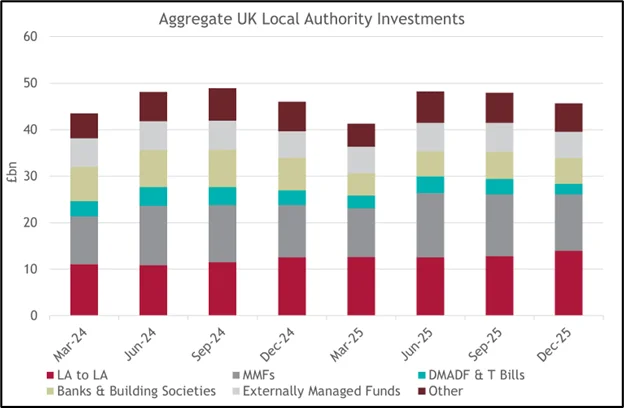
Local authority-to-local authority lending, a £13bn market, faces complexity during reorganisation, particularly where loans span vesting dates. Clear agreement, robust documentation, and pragmatic approaches such as managed debt are essential to minimise cost, maintain liquidity, and avoid operational disruption while ensuring an orderly transition to successor authorities.

Read insight: How Should Short-Term Inter-Authority Loans Be Managed During Local Government Reorganisation?
Is Government Thinking on Local Government Reorganisation Beginning to Shift?
07 Apr 2026Local Authorities

Is Government Thinking on Local Government Reorganisation Beginning to Shift?

Government decisions on local government reorganisation show a shift away from strict population thresholds towards models reflecting economic geography, service demand and local identity. Recent structures in Essex, Hampshire, Norfolk and Suffolk prioritise functional areas and community alignment, contrasting with Surrey’s scale-driven approach focused on financial sustainability and population size.

Read insight: Is Government Thinking on Local Government Reorganisation Beginning to Shift?