Volatility represents the degree of uncertainty in financial markets, reflecting the fluctuation of asset prices over time, and is widely interpreted as a risk gauge. A rise in volatility typically coincides with market stress or geopolitical tensions, while low volatility is associated with relative stability and confidence in the economic outlook. Although volatility is usually associated with risk, the two are not the same. Volatility measures uncertainty, rather than the likelihood of permanent loss.
One of the most widely recognised measures of volatility is the Cboe Volatility Index, or VIX. Created by the Chicago Board Options Exchange, it measures the market’s expectation of 30-day volatility in the S&P 500 index and is forward looking, capturing expectations of future market fluctuations. It has been observed to have an inverse relationship with the S&P 500; when the market falls, typically investor fears, volatility values and VIX levels rise.
Different VIX levels can be interpreted as follows:
0-10: Low volatility, typically associated with stable market conditions alongside strong investor confidence, and can indicate potential optimism.
10-20: Normal or average market conditions that are consistent with economic expectations.
20-30: Elevated uncertainty, likely associated with geopolitical or macroeconomic concerns.
30+: High market stress, typically indicating extreme turbulence in the market.
During uncertainty, investors will tend to seek protection from potential losses, driving an increase in demand for options. This behaviour in turn drives implied volatility higher and often leads to wider market swings.
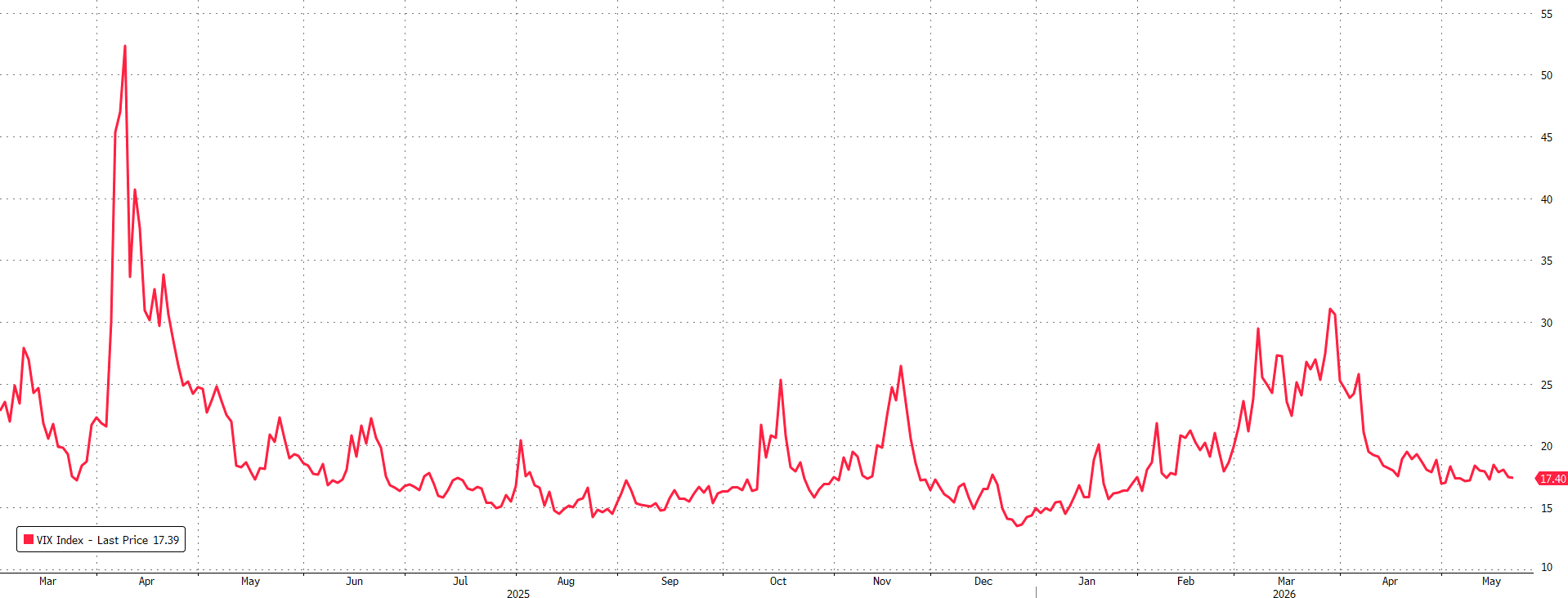
Recently, disruptions within the Middle East have caused a rise in market ‘fear’, with the VIX reaching around 31 at the end of March 2026, indicating extreme market stress as global oil supply depleted following the closure of the Strait of Hormuz. Similarly, the introduction of Trump’s tariffs in April 2025 contributed to elevated volatility with markets reacting to the uncertainty surrounding global trade and economic growth prospects with the VIX reaching the 50 level. These two events highlight that volatility is not driven by the event itself, but rather the uncertainty regarding the economic consequences.
Source: Bloomberg
However, when used alone, the VIX may not fully capture the risks in other regions as it is solely focused on expected volatility in US markets and may therefore be unable to provide a complete picture during periods where stress is concentrated in areas such as UK gilts or foreign exchange. Additionally, it is highly sensitive to short-term market sentiment which can lead to volatility spikes reversing quickly. As the VIX is relative to changing expectations, it can be more effective when used in comparison with broader economic and financial indicators such as inflation data, bond yields and credit spreads.
Volatility is a central measure of uncertainty within markets that provides insight into investor sentiment and market stability. Events such as geopolitical conflicts and shifts in trade policy demonstrate how rapidly volatility expectations can change in response. Although the VIX is a forward-looking measure and a useful lens for the current and short-term market sentiment, it cannot fully capture market risk and does not predict or guarantee market direction.
If you are interested in learning how financial market volatility can affect your business, please get in touch with us at info@arlingclose.com.
21/05/2026
Related Insights
Why Do Bond Yields and Prices Move in Opposite Directions?