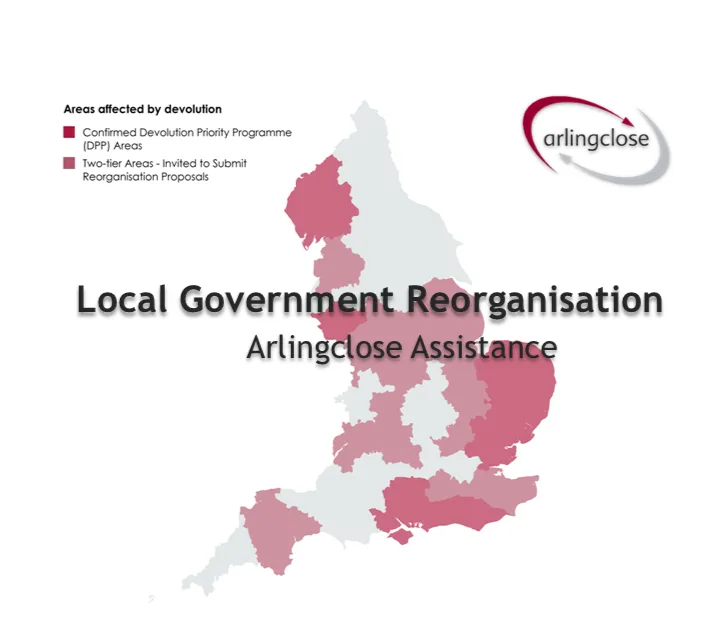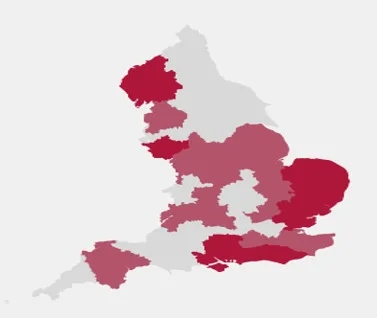
Local government reorganisation (LGR) will reshape governance structures, but it also has significant implications for debt portfolios and long-term financial sustainability. Central to this is the liability benchmark, which provides a measure of an authority’s underlying need to borrow for capital purposes, aligned with its long-term funding requirement and minimum revenue provision.
Under reorganisation, the debt inherited by a new unitary authority may not align neatly with its recalculated liability benchmark. Authorities merging or splitting will bring different capital histories, borrowing strategies and risk profiles. In some cases, debt levels may exceed the future requirement; in others, they may fall short. Until formal proposals are confirmed, finance teams face the challenge of managing existing portfolios without clarity on the eventual structure or funding need.
In this period of uncertainty, a pragmatic principle applies: if each authority maintains borrowing that broadly reflects its own liability benchmark, the successor authority is more likely to begin from a stable and sustainable position. Excess borrowing, unnecessary complexity or disproportionate refinancing risk will only complicate transition.
Several debt strategy considerations arise while the new structure remains unknown.
Authorities should continue to assess their liability benchmark and borrowing requirement, ensuring that new debt decisions are proportionate and justifiable. Market opportunities to restructure can still be taken where consistent with strategy. A relatively steep yield curve, for example, may favour shorter-term borrowing in appropriate circumstances. However, short-term exposure should remain within agreed risk parameters.
There may also be merit in repaying certain long-term or commercial loans where feasible. Instruments such as LOBOs can be administratively complex to novate and may introduce option or refinancing risk that a new authority would prefer to avoid. Eliminating such structures ahead of vesting day may simplify the inherited portfolio. Similarly, long-dated bullet loans can be inflexible and costly to repay early. With long-term rates still elevated, fixing at very long maturities may reduce future optionality and create substantial prepayment penalties if the debt is no longer required.
For general fund borrowing, amortising loans with regular principal repayments may provide a better match to the ongoing funding requirement and align more closely with the minimum revenue provision profile. In contrast, unnecessarily complex or potentially expensive structures, such as index-linked debt or sale and leaseback arrangements, are unlikely to aid a smooth transition and may create avoidable complications.
Once reorganisation proposals are confirmed, attention should turn to modelling the combined long-term funding requirement and recalibrated liability benchmark of the new authority. Finance teams will need to understand the characteristics of the merged debt portfolio in detail, including maturity profiles, lender mix, embedded options and refinancing risks. Practicalities will matter: the novation of loans, harmonisation of treasury management practices and the mechanics of vesting day require early planning and engagement with counterparties.
Finally, the successor authority will need to establish a coherent, unified risk strategy and treasury framework. Aligning policies and risk appetites across predecessor bodies, while maintaining operational resilience, will be demanding.
LGR inevitably brings uncertainty. However, by keeping borrowing aligned to the liability benchmark, favouring simplicity and flexibility, and avoiding unnecessary complexity, authorities can help ensure that new structures begin life on a sound financial footing.
To discuss how we can support your authority through LGR, contact the Arlingclose team today.
26/02/2026
Related Insights
Preparing for Local Government Reorganisation
How Does Adjustment-A Impact Local Government Reorganisation?
Are Treasury Teams Ready for Local Government Reorganisation?